You type "walleye lakes near me" into Google and get a wall of resort ads, a few sponsored listings, and a "10 Best Lakes" post that reads like it was written from a map, not a boat. None of it tells you the one thing you actually need to know before you load up the kids or a buddy for a Saturday: is this lake worth the drive, or are you about to spend the day explaining to a bored eight-year-old why the walleye aren't biting?
This post isn't a ranked shortlist of the best walleye lakes in MN. It's the method — how to check any walleye fishing near you yourself, including a lake twenty minutes from your driveway that nobody's ever bothered to write about.
Jump to a section:
🎯 Why "Near Me" Isn't the Same as "Good"
Distance is the easiest thing to search for and the least useful thing to base a trip on. A lake ten minutes from your house with a crashed walleye year class isn't a better choice than one twenty-five minutes out that's actually holding fish. "Near me" answers where you can get to. It doesn't answer whether you should bother.
The good news: the data that actually answers that question is public, it's specific to Minnesota, and you don't need a guide's thirty years on the water to read it. You just need to know where to look and what the numbers mean once you find them.
🔍 Step 1 — Filter Lakes by Species and County, Not Just Distance
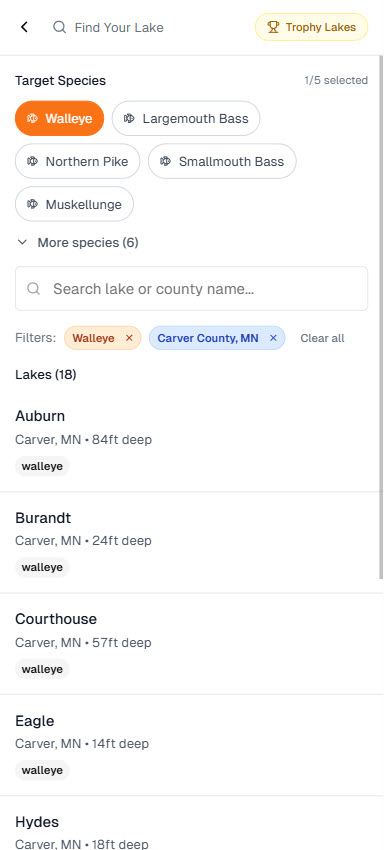
Before you can judge whether a lake is good, you need a real shortlist — not just whatever shows up first when you search walleye near me.
| Tool | What It Does | Use It For |
|---|---|---|
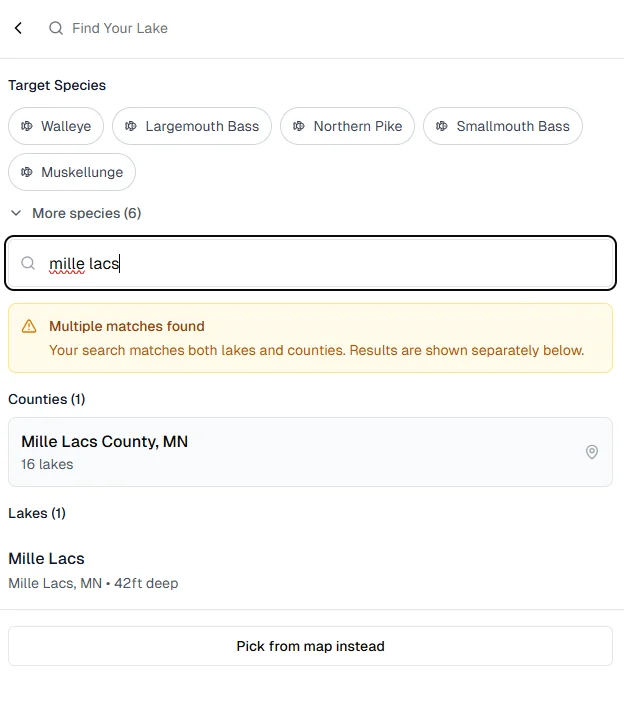
| Lake Finder — Species Search | Filters lakes by documented fish species | Every walleye lake in your county, not just the famous ones |
| Lake Finder — County Browse | Lists all fishable lakes in a county | Local options before a longer road trip |
| Trophy Lake Finder | Filters by species + minimum DNR-recorded size | Lakes with a documented shot at a trophy fish |
It's the difference between "lakes near me" and "walleye lakes near me that are actually worth checking."
📊 Step 2 — Check the DNR Numbers: What Makes a Walleye Lake Actually Good
This is the part most "best walleye lakes mn" content skips entirely, and it's the part that actually matters. The Minnesota DNR's own LakeFinder program measures walleye populations directly — how many fish per net, what size, and whether the population is trending up or down — for thousands of lakes statewide. You don't need to dig through a government PDF to see it; Fish Guide Pro pulls the key numbers into the app for thousands of Minnesota lakes.
Case study: Diamond Lake, Kandiyohi County (1,610 acres, 27 ft max depth, near Atwater)
| Metric (2023 DNR Standard Survey) | Result |
|---|---|
| Walleye abundance | 30.33 fish/net (vs. 18.73 fish/net historical average) ⭐ |
| Quality-size catch rate (15"+) | 10.00 fish/net — high |
| Preferred-size catch rate (20"+) | 5.00 fish/net — high |
| Average length / weight | 14.7 in / 1.53 lb |
| Growth rate | Fair to good |
| Strongest year classes | 2022 and 2021 — recent, consistent recruitment |
That's not a marketing claim. That's the DNR's own gillnet data. In plain terms: the fish you'd catch this weekend mostly hatched two or three years ago, not fifteen — the lake's still actively making new walleye, not coasting on an old class that's slowly getting fished out.
Worth knowing: Diamond's story isn't perfectly clean, and it shouldn't be — real lakes rarely are. Its young-of-year walleye numbers have swung year to year, partly due to zebra mussels first documented in the lake in 2018, and partly due to spring weather affecting natural reproduction. The DNR runs annual fall electrofishing surveys specifically to track that variability and adjusts stocking accordingly. That kind of nuance is exactly why it's worth checking the actual numbers instead of trusting a "top 10" list — a lake can be genuinely good and still have an off year class, and the data tells you which one you're looking at.
🤖 Step 3 — Let Species Hotspots Narrow It Down Inside the Lake
Once you've picked a lake worth fishing, the next question is where to start on it. A 1,600-acre lake doesn't hand you the answer just because the DNR numbers look good — and every minute spent idling around guessing is a minute your kid or your buddy is sitting in the boat waiting on you, not fishing.
Fish Guide Pro's Species Hotspots feature ranks specific spots on the lake based on:
- Target species — walleye, bass, crappie, and more score differently on the same water
- Current season — a top spot in May looks different in August
- Time of day — hotspots recalculate for dawn, midday, and night
- Confidence score — prioritize your day between multiple ranked spots
- Suggested depth range and technique — a starting point, not just a pin
It's built specifically so you're not burning the first two hours of your trip idling around guessing at structure.
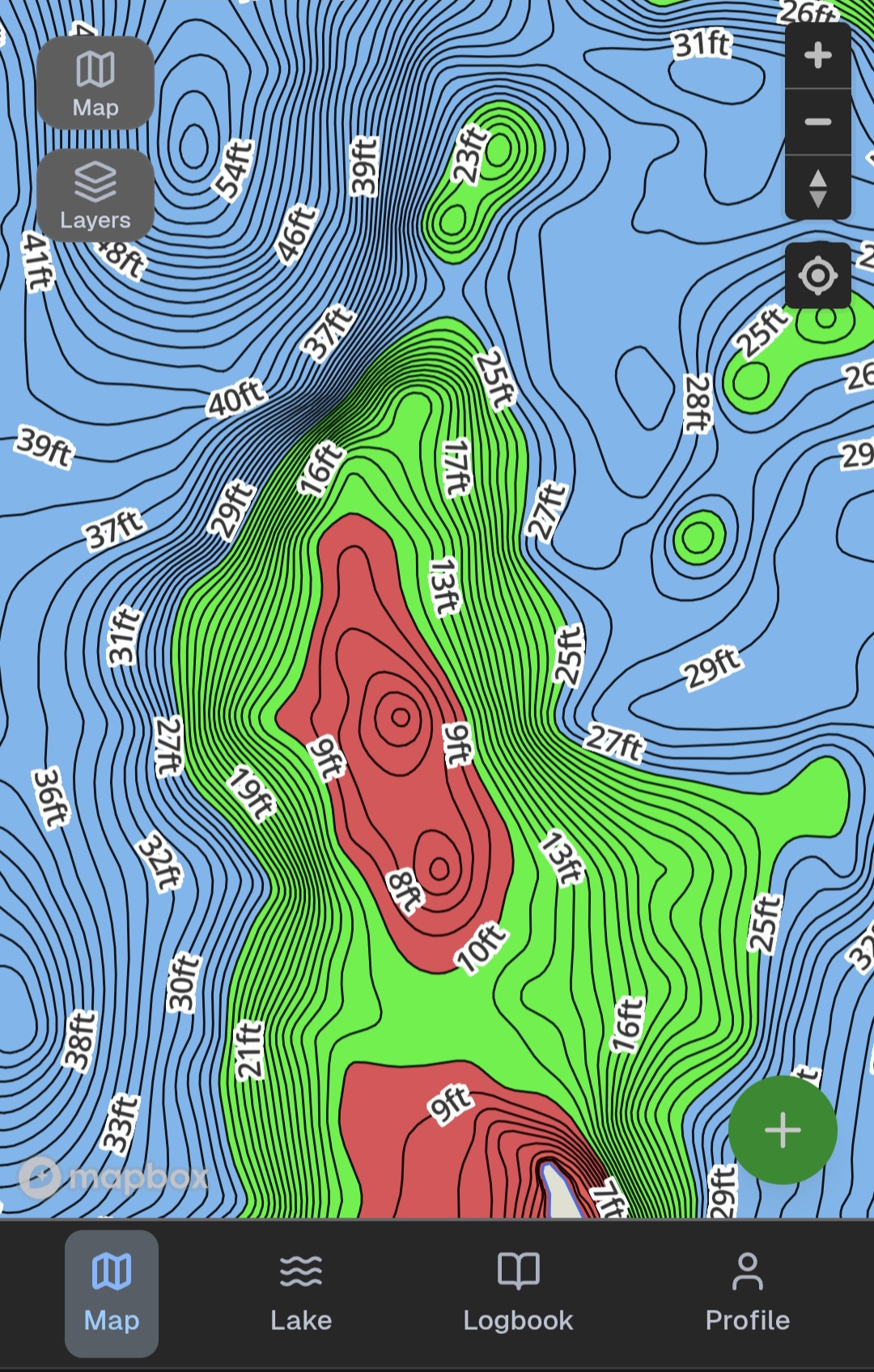
🗺️ Step 4 — Confirm Structure with the Contour Map Before You Launch
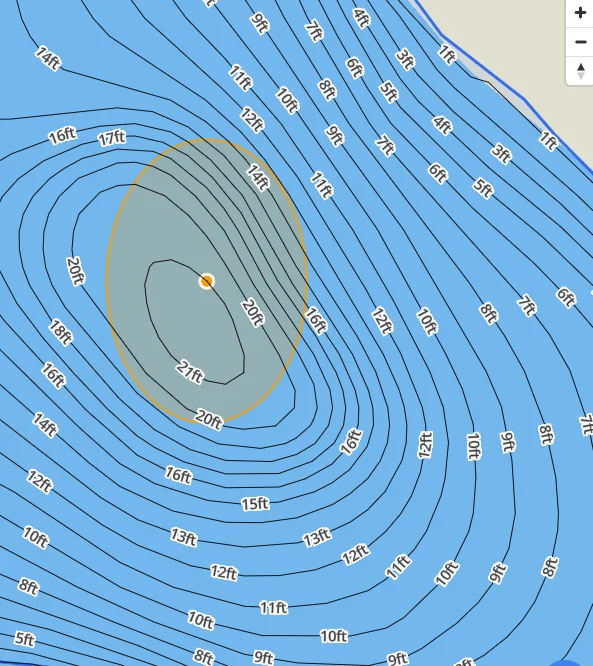
A hotspot recommendation is more useful when you can see why it's a hotspot. Pull up the Contour Map — 1-foot resolution derived from DNR data — and layer on Depth Shading to color-code the depth zones around that pin. Humps, breaks, and inside turns that are easy to miss on a standard map jump out immediately, so you're confirming the pick, not just trusting it blind.
⏱️ Your 5-Minute Pre-Trip Routine
- Search Lake Finder by species and county to build your shortlist.
- Pull the DNR survey numbers for the lakes on that shortlist — abundance, size ratings, and trend.
- Open Species Hotspots on the lake you pick to find where to start.
- Confirm the spot against the Contour Map and Depth Shading before you launch.
That's it. Four steps, and you're on the water with a real reason to believe you picked the right lake — not just the closest one. Which means the rest of the day is about the people in the boat with you, not about second-guessing the spot.
❓ FAQ
What makes a lake good for walleye? A combination of factors: walleye abundance per net compared to the lake's own historical average, the catch rate of quality- and preferred-size fish, recent year-class strength, and growth rate. No single number tells the whole story — the DNR survey narrative (things like forage base, water clarity, and invasive species presence) matters too.
How do I check DNR survey data for a Minnesota lake? The DNR publishes survey reports for individual lakes, but they're not always easy to parse. Fish Guide Pro pulls the key numbers — CPUE, size ratings, population trend — directly into the app for thousands of Minnesota lakes so you don't have to dig through PDFs.
How often is this data updated? It depends on the lake and survey type — heavily fished lakes are typically resurveyed every 3-5 years, with the largest lakes surveyed annually. Diamond Lake's numbers above are from its October 2025 survey, with the next one scheduled for May and August 2026. Fish Guide Pro reflects the DNR's most current published survey for each lake, and this post's numbers will be refreshed once new data posts.
Every moment on the water is too good to waste on guessing. Try Fish Guide Pro free and check any lake near you before you ever leave the driveway.
Case study data: Diamond Lake · Kandiyohi County, MN · 1,610 acres · 27 ft max depth · 2023 DNR standard survey