Knowing where to fish for bass in Minnesota is only half the equation — the other half is knowing what stage of the season you're fishing and adjusting your structure and presentation to match. This guide covers the seasonal patterns, the largemouth-vs-smallmouth split, and the gear to match, grounded in real Minnesota-specific content rather than generic national bass advice.
Looking for lake picks instead? See Best Bass Fishing Near Me: MN Lakes by DNR Data for real DNR numbers on specific Minnesota lakes.
Jump to a section:
🎯 Largemouth vs. Smallmouth: Different Game
Several of Minnesota's best bass lakes hold both species, and they don't relate to structure the same way — treating "bass" as one thing all season will cost you fish. Largemouth key on vegetation, wood, and docks: weed edges, laydowns, and dock shade are where they live. Smallmouth key on hard structure instead — summer smallmouth hold on main-lake rock piles and windswept points in 8–20 ft, with tubes and ned rigs on light jig heads (3/16–1/4 oz) as the top producers; cast past the structure and drag the bait across the rock, pausing in crevices. Smallmouth are more aggressive and willing to chase than largemouth, so faster retrieves trigger more reaction strikes. Lakes with shale, granite, or coarse gravel bottom are exactly where that pattern applies.

🌱 Pre-Spawn and Spawn — 50°F–65°F
Bass don't move far between seasons the way walleye or pike do — they spend most of the year within a fairly tight home range, which means the same summer structure that holds fish in July is usually the key to finding them in spring too. As water climbs through the low 50s, bass stage on the steepest bank or point closest to that summer structure, then work their way into the nearest shallow bay, cove, or protected cut to spawn once temperatures push into the upper 50s and low 60s. The fish you catch shallow in May aren't there because they like it there — they're there because they have to be, and they clear out fast once spawning wraps up.
Look for the first protected, sun-warmed bay near a steep drop rather than fishing every shallow flat on the lake. A jig-and-craw (3/8 oz football or flipping jig with a Strike King Rage Craw trailer) or a Texas-rigged soft plastic worked slowly along the first breakline into that bay covers both the staging fish and the spawners without you needing to guess which stage they're in. Once fish are visibly on beds, a weightless stick bait (Yamamoto Senko or similar) pitched past the bed and worked back through it is the standard sight-fishing approach.
☀️ Summer Pattern — 70°F+
Right after the spawn, bass go through a genuinely tough post-spawn stretch — worn out and holding tight to deep sanctuary water for a couple of weeks before they settle into a summer pattern once water temps climb past 70°F. Once that happens, they relate to structure again, typically where water depth transitions into the 20–30+ ft range depending on the lake, and they'll hold that pattern all summer.
This is reaction-bait season: a swim jig (Booyah Boo Jig, 3/8 oz), a chatterbait (Z-Man Original ChatterBait, bluegill pattern works well once the water's not too dirty), a swimming worm, or a paddle tail swimbait (Keitech Fat Swing Impact, 3.8") fished along weed edges, points, and breaklines covers the most water and triggers fish that are actively feeding rather than sitting tight. Dawn and dusk — the 30 minutes before and after sunrise and sunset on calm mornings — is prime topwater window: a walking bait like a Zara Spook over shallow flats and along weed lines produces some of the most explosive strikes of the year. Save the deeper, slower presentations for the middle of the day.
On developed metro lakes, don't skip the docks. Bass use dock shade, pilings, and ladders as ambush points — more contact points on a dock generally means more forage nearby, so pay extra attention to boathouses, ladders, and anywhere the dock structure changes rather than fishing every dock identically. A jig or Texas-rigged creature bait flipped tight to the shady side is often more productive than working natural weed edges once the sun gets high, especially on pressured water where boat traffic pushes fish to cover for relief.
🍂 Fall — Cooling Below 65°F
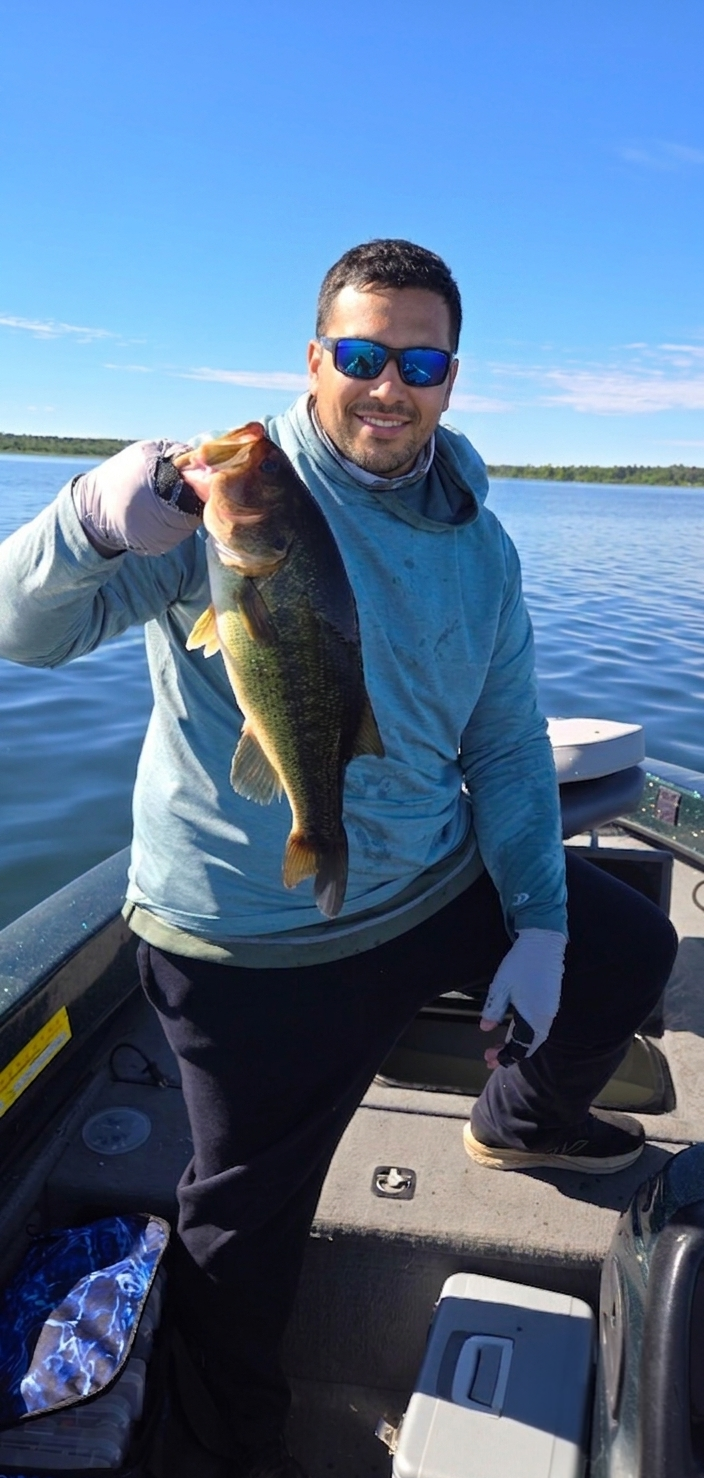
As water cools back below 65°F, bass push back out toward the same main-lake structure and breaklines that held them in summer, often feeding aggressively before ice-up. This is a good window to cover water with reaction baits again — a paddle tail swimbait (Keitech or Berkley Powerbait) or a lipless crankbait (Rat-L-Trap) worked along the same points and weed edges that produced in summer, adjusted deeper as the water continues to cool.
❄️ Bonus: Bass Don't Stop Biting at Freeze-Up
Largemouth are an underrated ice target in Minnesota — most anglers never target them once the lakes freeze, which means less pressure for anyone willing to try. Under the state's continuous bass season, winter bass fishing is legal catch-and-release on inland waters, so there's no closed-season question to sort out first (see our lake guide for the full regulation detail). They hold in 8–15 ft near weed edges and dock areas all winter, though they feed much less than they do in open water, so slow everything down. Small tungsten jigs (4–5mm) tipped with a wax worm or a small minnow head, fished vertically while watching your flasher for the slow rise of an interested fish, is the standard approach. Bass are often mixed in with crappie and perch through the ice — if you're set up on good crappie structure, don't be surprised when a bass shows up instead.
🤝 Handling Bass for a Healthy Release
With bass legal to target catch-and-release year-round now, how you handle a fish matters more than it used to. Summer heat is the riskiest window — warm water already stresses a bass's oxygen levels, and a long fight or extended air exposure on top of that meaningfully raises mortality risk. A few habits that cost nothing and matter a lot: keep fish wet and out of the livewell as briefly as possible if you're taking a photo, support the fish horizontally under the belly rather than holding it vertically by the jaw for an extended period (especially on bigger fish), and get it back in the water quickly rather than posing for a long series of photos. On hot days, consider skipping the livewell entirely for fish you're releasing immediately.
📡 Forward-Facing Sonar on Bass Lakes
If you're running Livescope or another forward-facing sonar unit, it changes how you fish pressured Minnesota bass water. On heavily tournament-fished metro lakes, bass get conditioned to blind-cast baits fast, and FFS lets you locate suspended and schooled fish relating loosely to structure instead of parking on a spot and hoping. It's particularly valuable for finding smallmouth on rock-and-current lakes, where fish can suspend well off bottom and away from obvious structure. If you've got electronics that let you watch a fish react in real time, use that to adjust your retrieve and bait size on the fly rather than sticking rigidly to the seasonal patterns above.
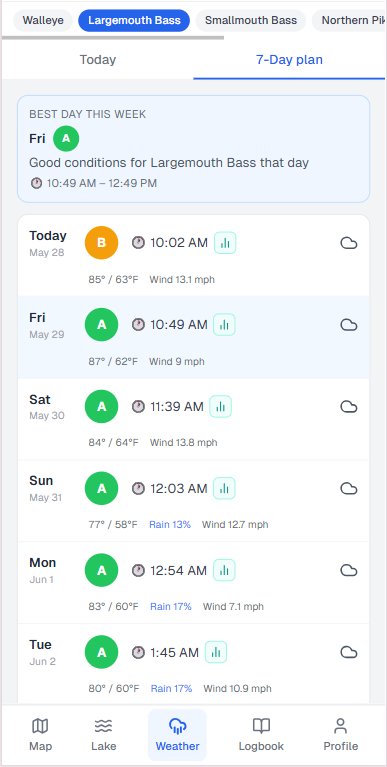
Since so much of this guide is built around water temperature thresholds, it's worth checking Fishing Score & Bite Timeline before you head out — it pulls pressure trend, solunar timing, and current water temp together into a daily grade and hourly bite window, so you're not guessing which stage of the seasonal pattern a lake is in on a given morning.
🎣 Quick Reference by Season
| Season | Water Temp | Location | Presentation |
|---|---|---|---|
| Pre-spawn | 50°F–58°F | Steep bank/point near summer structure, closest to spawning bay | 3/8 oz jig-and-craw, Texas-rigged worm worked slow |
| Spawn | 58°F–65°F | Shallow, protected, sun-warmed bays and coves | Weightless stick bait, sight-fishing beds |
| Post-spawn | 65°F–70°F | Deep sanctuary water near spawning bays | Slow down — this is the toughest bite of the year |
| Summer | 70°F+ | Weed edges, points, breaklines, and docks on developed lakes | Swim jig, chatterbait, paddle tail swimbait, topwater at dawn/dusk |
| Fall | Cooling below 65°F | Same main-lake structure, adjusting deeper as water cools | Paddle tail swimbait, lipless crankbait |
Largemouth key on vegetation, wood, and docks all season; smallmouth key on rock, gravel, and current breaks — adjust location within each stage based on which species (or both) the lake holds.
❓ FAQ
What's the best largemouth bait for Minnesota's short season? It depends on the stage: slow, subtle presentations (jigs, soft plastics) pre-spawn and post-spawn when fish are less aggressive, and reaction baits (swim jigs, chatterbaits, swimbaits) once the summer pattern sets in and fish are actively feeding.
What's the best smallmouth bait in Minnesota? Tubes and ned rigs on light jig heads (3/16–1/4 oz) are the top producers on the rocky, clear lakes where Minnesota smallmouth thrive — cast past the structure and drag the bait across the rock, pausing in crevices and depressions. Smallmouth are more willing to chase than largemouth, so a faster retrieve triggers more reaction strikes if the drag-and-pause approach isn't getting bit.
Does forward-facing sonar make a real difference on Minnesota bass lakes? Yes, especially on pressured metro water where bass see a lot of boat traffic and blind-cast baits. FFS is also particularly useful for locating smallmouth on rock-and-current lakes, where fish suspend off structure more than largemouth typically do.
Is there a closed season for bass in Minnesota? No — as of March 1, 2026, Minnesota has a continuous bass season on inland waters. Outside the traditional harvest window that opens in May, bass fishing is legal catch-and-release, year-round, with no closed period. Border waters (like those shared with Ontario) may follow separate rules — see our lake guide for lake-by-lake regulation notes.
Every moment on the water is too good to waste working the wrong structure for the season you're in. Once you've dialed in the pattern, see Best Bass Fishing Near Me for real DNR data on where to put it to use. Try Fish Guide Pro free and check the water temp and bite forecast before you launch.