Live bait almost always outperforms artificials when the bite is slow, post-front, or in cold water — but only if you're using the right bait, in the right size, hooked the right way. This guide covers Minnesota's core walleye baits, how to hook each one for different rigs, hook sizing, and a complete slip bobber setup — one of the most underrated tools in walleye fishing.
This guide is part of our Walleye Fishing Cheat Sheet — head there for seasonal patterns, lure colors, electronics, and gear setups.
Live bait almost always outperforms artificials when the bite is slow, post-front, or in cold water. The key is matching bait size and type to the season — smaller in cold water, larger for trophy fish.
Jump to a section:
Live Bait by Season
| Bait | Size | Best For | Seasons | Notes |
|---|---|---|---|---|
| Fathead Minnow | 2–3" | Jig tipping, year-round all-purpose | All seasons | Most versatile. Hook through lips for jigging. Through back for slip bobbers. Durable and widely available. |
| Shiner / Roach | 3–4" | Cold water, trophy fish, tip-ups | Spring, Winter | Top producer at first ice and pre-spawn. Lively in cold water. Hook in front of the dorsal fin for tip-ups. |
| Nightcrawler | Full or half | Spinner rigs, summer trolling | Summer, Fall | Thread full-length onto spinner harness with trailing hook through the tail. Soft plastics (rigging leeches) can substitute when small perch are stealing crawlers — more durable and still catch fish. |
| Leech | Medium to Jumbo | Slip bobber, jig tipping, drop shot, stand-up jigs | Summer (June–Sept) | The #1 summer walleye bait in Minnesota. Hook through the sucker end (wider end) — not the tail, which kills them quickly. Jumbo leeches are the go-to on slip bobbers; medium for jig tipping and drop shots. Completely useless below 55°F — they ball up and won't swim. Transition from minnows to leeches after the first major insect hatch, typically mid-June. |
| Cisco / Tullibee | 4–6" | Trophy ice fishing, first-ice tip-ups | Winter | Premium first-ice bait. Hook through back on large tip-up. Big fish forage — worth the extra cost for trophy-focused trips. |
| Creek Chub | 3–5" | Big fish trolling, river walleye | Spring, Fall | Excellent for trophy-sized walleye. Trolled behind bottom bouncer or spinner. More active swimming action than fatheads. |
Bait Hooking Guide
| Rig | How to Hook | Why |
|---|---|---|
| Jigging | Through lips — top lip to bottom lip | Keeps minnow alive longest; natural head-first swimming motion |
| Slip Bobber | Through back in front of the dorsal fin | Minnow swims freely without spine damage; stays lively longer |
| Tip-Up | Through back in front of the dorsal fin | Keeps bait alive; hooking behind the dorsal hits the spine and kills the shiner quickly |
| Spinner Rig | Thread nightcrawler full length, trailing hook through tail | Keeps crawler extended for natural profile behind spinning blade |
Hook Sizes for Walleye
Hook size gets overlooked but matters — too big and it kills a small minnow's action; too small and you lose fish.
| Application | Hook Size | Notes |
|---|---|---|
| Jig head (minnow tipping) | #2 to #1 | Most 1/8–3/8 oz jigs come rigged with a #2 or #1; don't go larger or you kill the bait's action |
| Slip bobber with small minnow | #4 to #2 octopus | Lighter wire hook lets minnow swim freely; octopus bend is the standard for good reason |
| Slip bobber with large shiner | #2 to #1 octopus | Need enough gap to hook up reliably on a bigger bait; don't go too small or you'll lose big fish |
| Drop shot (minnow or leech) | #1 or #2 straight shank | A #1 hook gets the bait farther back in the fish's mouth; use a finesse straight-shank hook for reeling hook sets |
| Spinner rig / crawler harness | #6 to #4 octopus (trailing) | Small hook threads through the crawler's tail without impeding its movement; slow-death hooks run slightly larger |
| Stinger hook | Size 10–12 treble | Small enough not to affect presentation; attach 1–2" behind main hook with a short piece of line |
| Tip-up with large shiner or cisco | #1 to #1/0 single | Strong enough wire for a big bait; wide gap ensures a solid hookset when a flag fires |
Slip Bobber Setup — Beginner Basics
A slip bobber rig is one of the deadliest and most overlooked walleye tools. It suspends your bait at a precise depth and keeps it nearly motionless — perfect for neutral, post-front, or pressured fish. A jumbo leech on a slip bobber during a summer evening is the single most productive walleye presentation in Minnesota from June through August. This isn't an exaggeration — when conditions are right, it borders on unfair.
Full component list:
- Slip bobber (small finesse style for calm water; larger weighted bobber for casting distance into wind)
- Bobber stop (slip-knot stop or rubber bobber stop — slides onto line and holds the bobber at your chosen depth)
- Bobber stop bead (tiny bead above the bobber so the stop doesn't slip through the bobber hole)
- Swivel (size 1 ball bearing swivel — stops the weight from sliding down and lets you use a separate leader)
- 18–24" fluorocarbon leader (6–8 lb; in dirty water keep it short, 18"; in clear water go 24–36")
- 1/16–1/8 oz finesse jig or #2–#4 octopus hook (a small weighted jig with a wide-gap hook holds big fish better than a crappie hook)
- Small split shot if not using a jig head — pinch it 10–12" above the hook to keep the bait from floating up
How to rig it:
- Slide the bobber stop onto your main line, then add the bead
- Thread line through the slip bobber — it slides freely up and down until the stop catches it
- Tie on the swivel; the swivel acts as a weight stop and leader junction
- Tie your fluoro leader to the other end of the swivel
- Tie on your finesse jig or hook; bait up and you're fishing
Rod for slip bobbers: Use a longer, softer rod (7'6"–8' medium-light, moderate action). The longer length casts the rig farther; the moderate/parabolic action loads up on the cast without flinging the bait off and is forgiving when landing big fish on a small hook. Big oversized guides help the bobber stop fly through cleanly. See our Rod, Reel & Line Setup Guide for the full rod lineup.
Setting depth: Move the bobber stop up or down before threading the line through the bobber. Start 1–2 feet off the bottom. If you're marking fish on sonar at 18 ft in 22 ft of water, set your stop at 17 ft — just above them. When a fish takes the bait, the bobber will either dip under or lay flat on its side — both are strikes.
When to use it: Post-front, clear water, heavily pressured fish, or any time jigging isn't triggering bites. At its absolute best from mid-June through August with a jumbo leech — hook the leech through the sucker end (the wide, flat end, not the narrow tail). A leech hooked correctly will swim in circles and spiral upward, creating constant movement that walleye find irresistible. A dead or balled-up leech catches nothing — check your bait every 10–15 minutes and replace if it's not swimming actively. Nightcrawlers work well on bobbers too, particularly earlier in the season before leeches are fully active.
Live Bait in Cold vs. Warm Water
Cold water (under 50°F): Small fatheads or shiners, slow presentation. Leeches ball up and are useless below 55°F. Crawlers lose activity in cold water. Stick to minnows — they're the only live bait that works reliably in cold conditions.
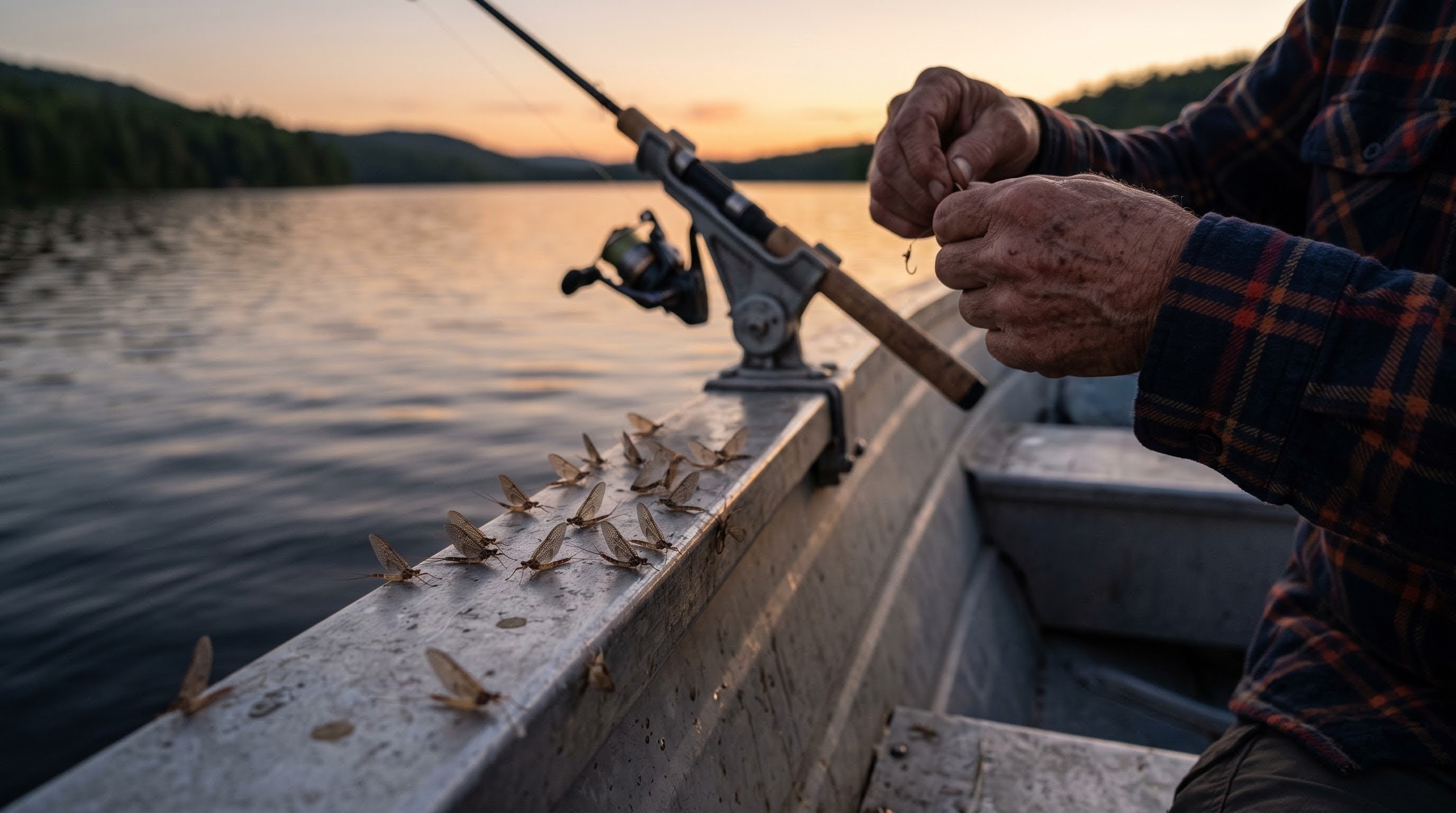
The transition (55–62°F): As water climbs through the mid-50s, leeches start to swim. This is when you can begin mixing them in. Watch for the first major insect hatch — mayflies, caddisflies — which typically fires off in mid-June in Minnesota. Once that hatch happens, walleye lock onto leeches and crawlers hard and the minnow bite often drops off dramatically.
Warm water (62°F+): Leeches are your primary live bait edge from now through September. A jumbo leech on a slip bobber at dusk is the single deadliest summer walleye presentation in Minnesota. Medium leeches work on jigs (hook through the sucker end, pop and slow drag — the leech swims and undulates naturally), and on drop shots where the leech hangs suspended and writhes without moving away from the fish. Crawlers on spinner rigs excel from July through September for covering water. See our Seasonal Patterns guide for where to find fish as this transition happens, and the Drop Shot & Ned Rig guide for rigging a leech on a drop shot.
Related Reading
- Walleye Fishing Cheat Sheet (Hub) — lure colors, when they won't bite, electronics, equipment, and more
- Walleye Seasonal Patterns: A Season-by-Season Depth & Structure Guide
- Drop Shot & Ned Rig for Walleye: Finesse Rig Setup Guide
- Walleye Rod, Reel & Line Setup Guide