It happens every fall. The fish were right where you left them last weekend — same hump, same depth, same bait. This weekend the graph is a mess, the water looks like weak coffee, and the spot that carried you all September is dead.
Odds are your lake is turning over.
Fall lake turnover is one of the most predictable events on a Minnesota lake, and one of the most misunderstood. It doesn't last forever, lakes don't all do it at the same time, and once you know what's going on, you can plan around it instead of burning a Saturday on it.
Quick answer: Lake turnover is when a lake's summer temperature layers break down and the whole lake mixes top to bottom. Fish lose the boundaries that kept them in predictable spots and scatter, so the bite feels dead for a stretch. The fish didn't leave — they spread out. Fish a lake on a different schedule, fish green weeds and windblown rock, and lean on your electronics until they regroup.
Jump to:
What Is Lake Turnover?
By midsummer, most deeper Minnesota lakes are split into layers. Warm water sits on top. Cold water sits on the bottom. In between is a thin band where the temperature drops fast — the thermocline. On many deep-basin lakes, that band sets up somewhere around 20 to 30 feet down.
Those layers don't mix much. The cold bottom layer is cut off from the surface all summer, so it often runs low on oxygen — on some fertile lakes, close to none by late summer. That's why summer fish tend to stack at or above the thermocline instead of hugging the deepest water.
Then fall shows up. Cold nights cool the surface water, and colder water is heavier. According to the Minnesota DNR, water is densest at about 39°F. As the top layer cools, it sinks and mixes downward, and the thermocline gets weaker. Once the surface has cooled to roughly match the water below it, nothing is holding the layers apart anymore, and wind mixes the lake from top to bottom. That top-to-bottom mixing is lake turnover, and it keeps going through the fall as the whole lake slides toward 39°F ahead of ice-up.

In the long run, that's good for the lake: oxygen gets pushed back down into the depths, which is exactly what fish need to spend the winter deep. The short-term picture is messier. While it's happening, all that oxygen-poor bottom water gets blended into the rest of the lake, and on fertile lakes that turn over fast, overall oxygen can dip for a while. In extreme cases, a rapid turnover can even cause a fish kill.
One Twin Cities wrinkle: Carver County has flagged that chloride from road salt collects in the bottom of some metro lakes. That heavier, saltier water can keep a lake from mixing completely. If your home lake is in the metro, it may not follow the textbook.
Why the Bite Dies
Fish lose their boundaries. All summer, the thermocline acted like a ceiling for some fish and a floor for others. When it disappears, fish can suddenly go almost anywhere in the water column. The tight schools you were marking get spread across the lake.
The water changes overnight. Bottom water that's been sealed off all summer gets stirred up with everything in it — decaying material, sediment, and gases. Clarity drops, oxygen can dip, and some lakes pick up a noticeable smell.
Everything is in transition at once. Weeds are browning, baitfish are moving, and predators are repositioning for fall. It can take a few weeks for fish to settle into their typical fall spots.
Put those together and you get the classic turnover day: fish are there, but they're scattered, unsettled, and hard to pattern. Most anglers read that as "they're not biting." More often, the problem is that they're not grouped.
Before Turnover: Watch the Thermocline Sink
Turnover doesn't flip on like a switch. In early fall, as the surface layer cools and mixes downward, the thermocline weakens and the warm top layer gets thicker. On your graph, that often shows up as the clutter band sitting a little deeper, or looking fainter, week to week.
That's useful in two ways. Fish that were relating to the thermocline tend to shift with it, so if your summer depth goes quiet in early fall, check a few feet deeper before you give up on the area. And a thermocline that's fading fast is your heads-up that the lake is close to turning.
How to Tell If Your Lake Is Turning Over
Most anglers don't carry a temperature probe, so start with what you can see from the boat:
| Sign | What you'll notice |
|---|---|
| No thermocline on your graph | The clutter band you've been seeing at 20-some feet is gone, and fish show up at random depths |
| Clarity crashes | A clear lake suddenly looks murky, brown, or stained |
| Floating debris | Bits of weed, scum, or "gunk" on the surface that weren't there last week |
| A funky smell | A sulfur or rotten-egg odor as bottom water reaches the surface |
| Surface temp drops fast | Your graph shows a big fall in surface temperature over a few days |
If you want to know for sure, check the temperature top and bottom. The DNR's rule of thumb: if the surface and bottom temperatures are within a few degrees of each other, the lake has turned over. A thermometer on a rope over the deepest part of the basin will tell you in five minutes.
When Does Lake Turnover Happen in Minnesota?
There's no set date. Timing depends on the lake's depth, size, shape, and exposure to wind, plus how fast the weather cools off.
- Small, shallow lakes may never set up strong layers at all, or they mix much earlier than the deep lakes around them.
- Big, shallow, wind-swept basins get churned constantly. Their layers tend to be weaker and easier to break, so turnover there is often less of a dramatic event.
- Deep, sheltered lakes — the ones with steep shorelines and a basin that the wind can't easily reach — generally hold their layers the longest and are often the last to turn.
- Anglers commonly start noticing the disruption as surface temps slide through the 50s, though every lake is a little different.
The practical move is to watch the trend, not the calendar. Fish Guide Pro's Water Temperature feature shows up to 60 days of temperature history for a lake, so you can see whether it's been sliding slowly or dropping off a cliff. A steep, steady fall is your cue that things are about to get shuffled.
Fall 2026 conditions: In mid-September 2026, Mille Lacs was still reading around 64°F at the surface with a thermocline in the mid-20-foot range, and Lake Minnetonka was around 67°F — both still on the warm side of fall. On some northern lakes, crawlers were still producing in early September with water in the 70s.
How to Fish Through Turnover
1. Switch lakes — in the right order
This is the biggest one. Lakes in the same area turn on different schedules, and you can use that. As fall goes on, a rough rule of thumb:
- Early fall: Deep, sheltered lakes are still layered. If a shallow lake near you is mid-turnover, head to one of those.
- Mid-fall: Shallow lakes that mixed first have usually had time to settle. Go back to them while the deep lakes start turning.
- Late fall: The deep lakes are the last to turn and the last to settle. Once they do, they often hold the best late-season fish.
Rivers are another solid backup at any point. Moving water doesn't set up layers the way a lake does, so turnover isn't the problem there.
2. Go shallow and find green weeds
Weeds that are still green are still producing oxygen, and they hold baitfish. Panfish and the predators that eat them will hang on those beds as long as they stay green. Once a weedbed browns out, expect the fish to leave it.
3. Fish the wind
Windblown rocky points and reefs are some of the best fall water on any lake. Wave action pushes food in, baitfish follow, and walleye aren't far behind. Work the windward face of the rock.
4. Cover water until you find them
Scattered fish reward the angler who moves. Trolling or drifting lets you check a lot of water fast. If you're working a big flat or a long break, Fish Guide Pro's Tracer draws your path on the map so you're not re-covering the same stretch.
5. Trust the graph over the milk run
Your summer spots are built on summer fish. During turnover, go where your electronics show fish right now, even if it's not where you expected them.
6. Switch your bait as the water cools
Summer live bait doesn't last all fall. Crawlers and leeches can keep producing into September while the water is still warm, but as water temps fall, minnows take over. Shiners and fatheads on a jig are the standard fall walleye setup, and a crappie minnow is hard to beat for fall panfish. Check your bait shop's supply before you go; shiners can be hit or miss. For the full rundown on when each bait shines, see our live bait guide for walleye.
7. Check the day before you commit
Turnover isn't the only thing moving fish in fall — fronts and pressure swings stack on top of it. Fish Guide Pro's Fishing Score gives each day an A–F grade for your target species with an hourly bite timeline, so you can pick your best window instead of guessing.
Where Fish Go Once the Lake Settles
Here's the good news: post-turnover can produce some of the best fishing of the year. Once fish regroup, they tend to group tight.
| Species | Where to look after turnover |
|---|---|
| Walleye | Water in the 50s: windblown rocky points and reefs, late afternoon into evening. Water in the 40s: main-lake humps, bars, and deep weed edges in about 20–30 feet, worked vertically with a jig and minnow. Full breakdown in our fall walleye patterns. |
| Crappie | Main-lake structure near the basin, often 15–25 feet. Evenings are most reliable early in fall; daytime bites improve as schools tighten. |
| Yellow perch | Traditional fall perch spots — sand and gravel flats and the edges just outside them. |
| Largemouth bass | The last green weeds and the deep weedline where it meets the drop-off. Fall can be one of the best times to catch a big one. |
| Smallmouth bass | Deeper rock — sunken islands and big boulders off the shoreline. |
| Pike & musky | Big pike move back into shallow pike spots as water cools; the musky bite on rock tends to improve as temps keep dropping. |
Falling water temperatures are a feeding trigger in fall, especially for walleye. That's why the bite can go from dead to excellent once a lake finishes turning and fish find their fall spots.
The Late-Fall Bonus: The Cisco Spawn
On Minnesota's deep, cold lakes, the best big-fish window of the year often comes right before ice-up. Ciscoes (tullibees) are an open-water baitfish that big walleye, pike, and musky feed on all year — and in late fall, they move up onto shallow rocky, gravel, and sand shoals to spawn, usually in low light.
For a short stretch, the lake's biggest predators follow them in. That's why dedicated musky anglers stay on the water well into November, and why walleye anglers who stick it out through the cold sometimes catch the fish of the year.
Not every lake has ciscoes. They need cold, oxygen-rich water and are mostly found in deeper northern lakes. Fish Guide Pro's DNR survey data flags whether a lake has cisco forage, so you can check before you plan a late-season trip around it.
Plan the Post-Turnover Bite Before You Launch
Fall days are short and cold, and a lot of them are the last trips of the year with the people who matter most to you. Nobody wants to spend one idling around a lake waiting for the fish to show up.
The structure that holds post-turnover fish is easy to find on a good map, before you ever leave the driveway:
- Mid-lake humps that top out around 20–25 feet for fall walleye
- Rocky points that drop quickly into deep water — check which side the wind will hit
- Main-lake structure in 15–25 feet near the basin for crappie schools
- Deep weed edges where the weedline meets the drop-off
- Shallow rock and gravel shoals near deep water on cisco lakes for the late-fall bite
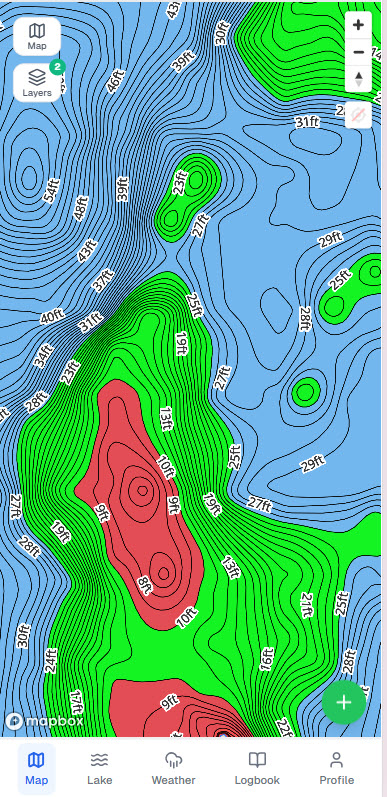
Fish Guide Pro's 1-foot contour maps (Pro) and Depth Shading make these jump off the screen — set a shading range around 15–30 feet and the fall structure on most lakes is obvious. Drop waypoints on your top spots at home, check the lake's DNR survey data to make sure it actually has the fish you're after, and download the map for offline use if you're heading somewhere with spotty signal. If you're new to reading structure, start with our guide to reading depth contour maps.
Before you go, check the lake's regulations. Some lakes have special rules or seasons that differ from statewide regs, and fall is when a lot of anglers end up on water they don't usually fish.
Don't Skip the Cold-Water Basics
Fall air can feel fine while the water is dangerously cold, and it only gets colder as the season goes on. Falling into cold water can take your breath away and make it hard to swim within minutes. Wear your life jacket — not just have it in the boat — tell someone where you're going, and pack an extra layer for everyone aboard. The best fall trip is the one everybody comes home from.
The lake doesn't have to be a mystery — even in turnover. Try Fish Guide Pro free and scout your fall spots before you launch.
Lake Turnover FAQ
Does fall lake turnover ruin fishing? Temporarily, it can make fish hard to find because they scatter. It doesn't mean they stop eating. Anglers who switch lakes, fish green weeds and windblown rock, and cover water still catch fish during turnover.
How long does fall turnover last? It varies by lake. The mixing itself can happen over days to weeks, and it can take a few weeks for fish to settle into their fall spots afterward.
At what water temperature does a lake turn over? There isn't one magic number. Turnover happens when the surface cools to about the same temperature as the water below it, so it depends on the lake. Many anglers notice it as surface temps fall through the 50s. The mixing continues as the whole lake cools toward 39°F.
Do fish go deeper after turnover? They can. Once mixing brings oxygen back to the deep water, fish are free to use the basin again, and many species spend the winter in deeper water. In the meantime, they may be at almost any depth, which is why covering water matters.
Do all Minnesota lakes turn over? Most deeper lakes do. Small shallow lakes may never form strong layers, big wind-swept basins tend to have weaker layers that break more easily, and some metro lakes with high chloride levels may not mix completely.
Do ponds turn over too? Yes. Pond water turnover works the same way: deeper ponds can form layers in summer and mix in fall just like lakes. Because a pond holds so much less water, a fast turnover can drop oxygen more sharply, and in the worst cases it can cause a fish kill.
Does turnover happen in spring too? Yes. Lakes also mix in spring after ice-out, as surface water warms toward the same 39°F point and wind mixes the lake before summer layers form again.
How can I tell if my lake has turned over? Look for the thermocline disappearing on your graph, sudden murky water, floating debris, and a sulfur smell. To confirm, compare surface and bottom water temperatures — if they're within a few degrees of each other, the lake has turned over.
Related Reading
- Walleye Seasonal Patterns: A Season-by-Season Minnesota Depth & Structure Guide
- Walleye Fishing Cheat Sheet (Hub)
- Live Bait for Walleye: Minnows, Leeches, Crawlers & Rigging
- How to Read Depth Contour Maps for Fishing (Complete Guide)
- 10 Best Walleye Lakes in Minnesota (2026 DNR Data)
- Minnesota Ice Fishing Guide